
Flubber and flow

2025-10-30T13:24:42-06:00
10/2025
Supporting Image
Supporting Image
Modeling glaciers
by Justin Burton, Alex Vargas

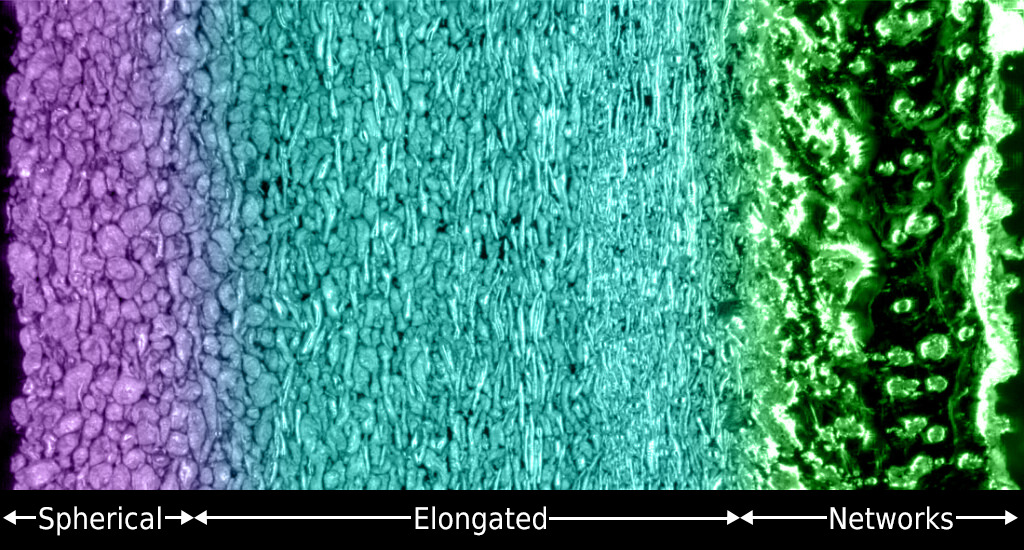
Glaciers have shaped the face of our planet for millennia, developing over hundreds and thousands of years as layers of snow compress into solid ice. Or IS it . . . ? Click to learn how glaciers actually flow like a liquid, and how the surprisingly similar physics of Flubber can build our intuition for how real glaciers behave.

0 0    
Flubber and flow2025-10-30T13:24:42-06:00

Polymers at Play: Make your own Silly Putty!

2025-10-30T13:25:04-06:00
08/2025
Supporting Image
Supporting Image
Silly Putty, serious science

There is some serious science behind Silly Putty! This classic toy gets its unique properties from materials you can find around your house or at the grocery store. Click to learn how you can make your own Silly Putty at home and try some fun experiments to investigate its properties!

0 0    
Polymers at Play: Make your own Silly Putty!2025-10-30T13:25:04-06:00

Polymers at Play: Color Me Crystallized!

2025-08-14T13:43:50-06:00
03/2025
Supporting Image
Supporting Image
Mood rings
by Sara Callori, Zoryanna Alvarez, Andres Munoz

How can this ring change color depending on its wearer’s mood? The short answer is polymers—long molecular chains that make up everyday objects like garbage bags and toothbrushes, along with some of your favorite toys! Click to learn how mood rings rely on the shapeshifting behavior of polymers to predict your mood. (Maybe.)

0 0    
Polymers at Play: Color Me Crystallized!2025-08-14T13:43:50-06:00

Connecting the (Liquid Metal) Dots

2023-04-20T16:07:12-06:00
12/2022
Supporting Image
Supporting Image
Soft conductive materials
by Aaron Haake, Eric Markvicka

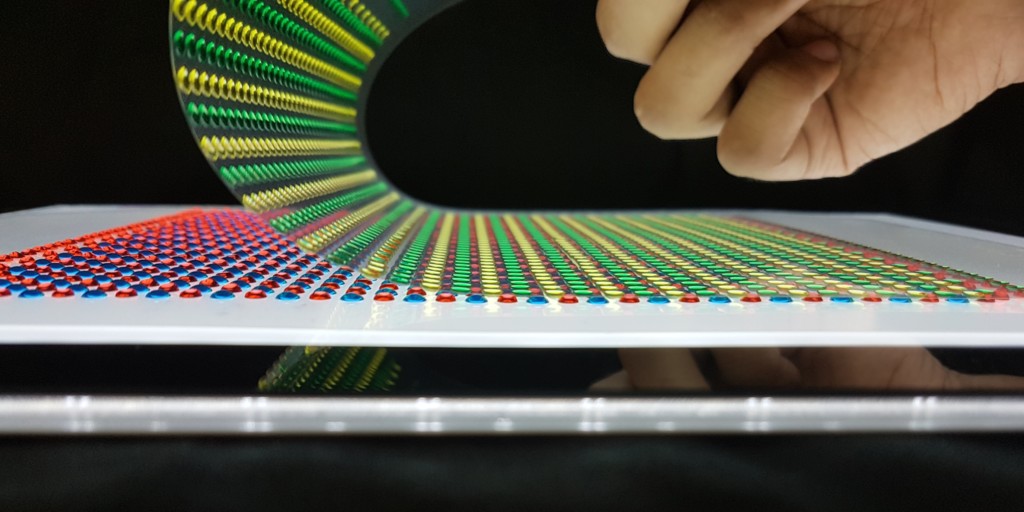
The future of wearable electronics will be smart skins, e-textiles, and other flexible devices. To create these devices, we need new materials that can bend and stretch, but still conduct heat and electricity like traditional metals. Liquid metals to the rescue—read on to learn more!

0 0    
Connecting the (Liquid Metal) Dots2023-04-20T16:07:12-06:00

Use a laser pointer to measure the thickness of your hair!

2021-07-14T11:14:27-06:00
11/2020
Supporting Image
Supporting Image
Light scattering and diffraction

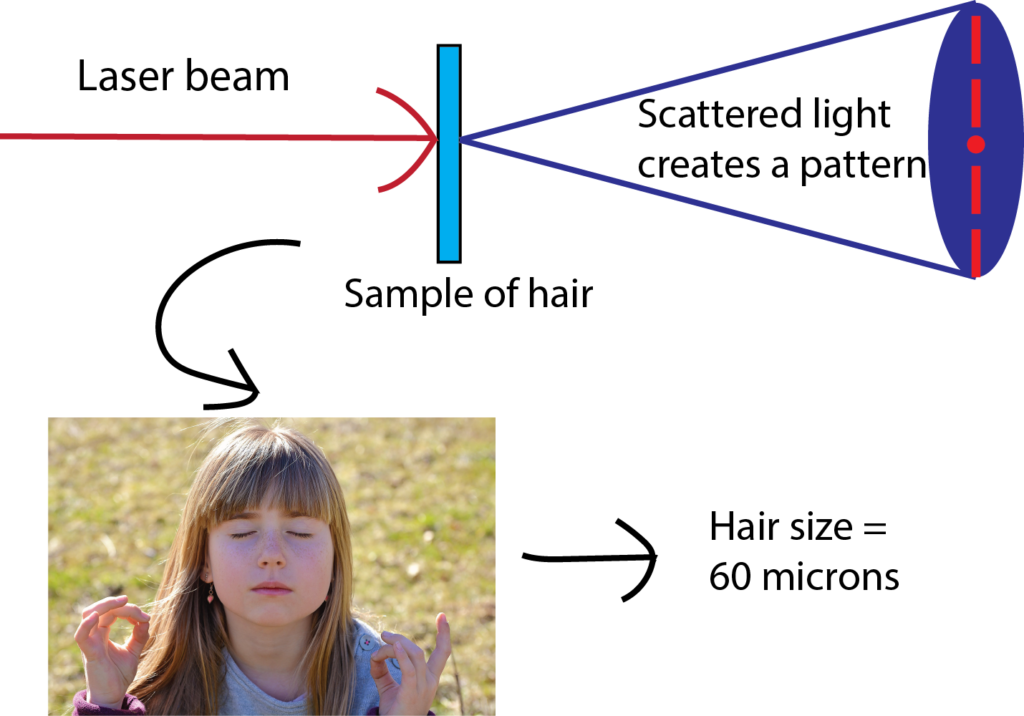
Have you ever wondered how scientists can accurately measure the size of very small objects like molecules, nanoparticles, and parts of cells? Scientists are continually finding new ways to do this, and one powerful tool they use is light scattering. When an incoming beam of light hits an object, the light "scatters," or breaks into separate streams that form different patterns depending on the size of the object. This incoming light might be visible light, like the light we see from the sun, or it might be higher-energy light like X-rays. The light from commercial laser pointers, it turns out, is perfectly suited to measure the size of a human hair!

0 0    
Use a laser pointer to measure the thickness of your hair!2021-07-14T11:14:27-06:00

How to Make a Giant Bubble

2021-07-14T10:43:02-06:00
03/2020
Supporting Image
Supporting Image
Soapy Science

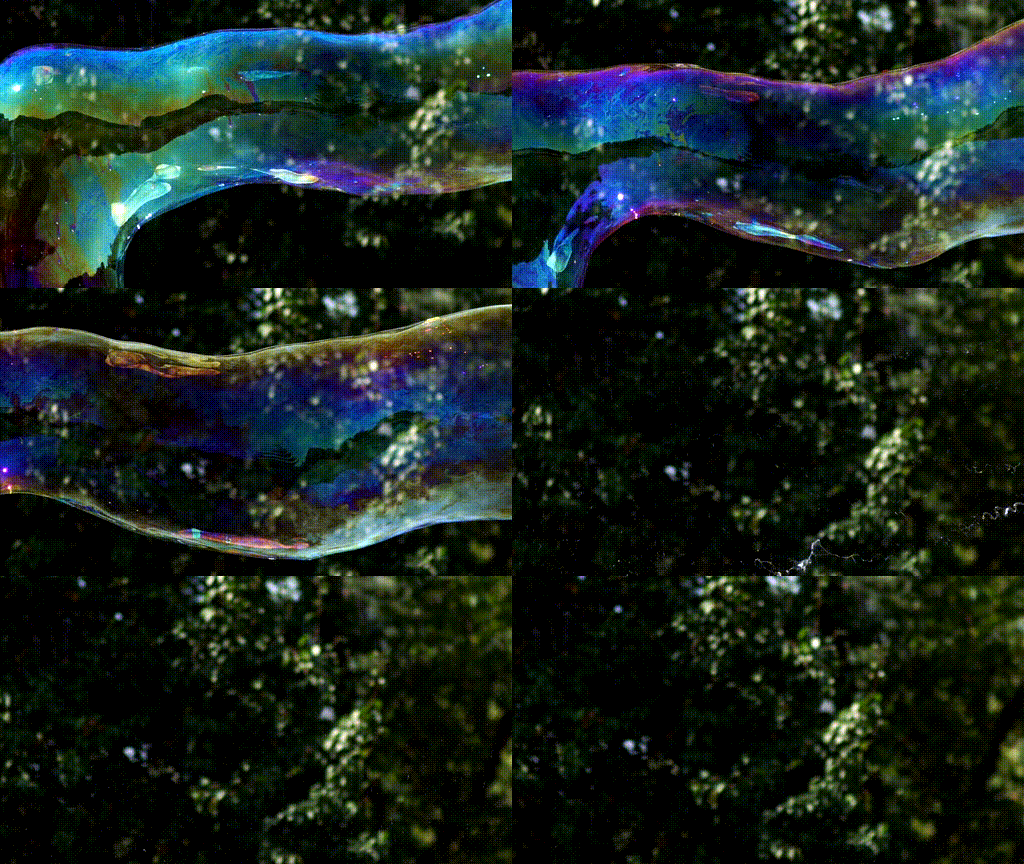
For the past two decades, giant bubble enthusiasts have been creating soap film bubbles of ever-increasing volumes. As of 2020, the world record for a free-floating soap bubble stands at 96.27 cubic meters, a volume equal to about 25,000 U.S. gallons! For a spherical bubble, this corresponds to a diameter of more than 18 feet and a surface area of over 1,000 square feet. How are such large films created and how do they remain stable? What is the secret to giant bubble juice? Click to find out more!

0 0    
How to Make a Giant Bubble2021-07-14T10:43:02-06:00

Bioelectricity, Reimagined

2021-07-14T10:51:40-06:00
01/2018
Supporting Image
Supporting Image
Electric Eel Inspires New Power Source

The electric eel's ability to generate incredibly large amounts of electric power from within its body has fascinated scientists for centuries. In fact, some of the world’s first batteries were inspired by studies of this amazing animal. Now, scientists have developed a new eel-inspired energy source that may one day be used to power electronics implanted within the human body.

0 0    
Bioelectricity, Reimagined2021-07-14T10:51:40-06:00

Creating nanoscale octopus structures from polymer brushes

2021-07-14T10:52:43-06:00
01/2018
Supporting Image
Supporting Image
Molecular engineering

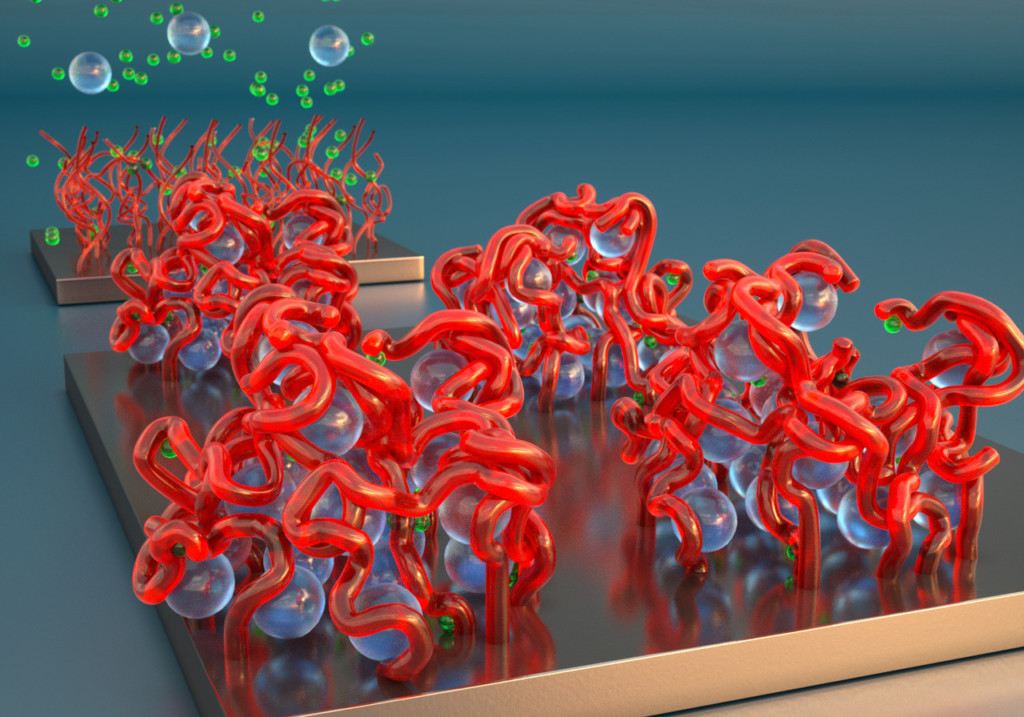
Very small structures, much smaller than the human eye can see, often fall in the size range of nanometers. By understanding how the molecules that make up these structures interact, we can engineer them to do many special things that cannot be done at a larger scale. One exciting structure is a polymer brush, in which long, chain-like molecules called polymers are tethered at one end to a surface and stick up from the surface like bristles on a hairbrush. Polymer brushes can be used to keep bacteria away, provide an exceptionally smooth surface for items to slide across, or trap other molecules in solution like a hairbrush traps loose hair. In order to engineer polymer brushes that will perform as desired for a given application, we must understand the physics of how the molecular bristles move, and the chemistry of how they interact with their environment.

0 0    
Creating nanoscale octopus structures from polymer brushes2021-07-14T10:52:43-06:00
Go to Top