


FUNSIZE RESEARCH
Posts showcasing the wonder, beauty, and potential of cutting-edge materials research—freely contributed by physicists from across the country. (Funsize Physics is not responsible for any minds that are blown.)


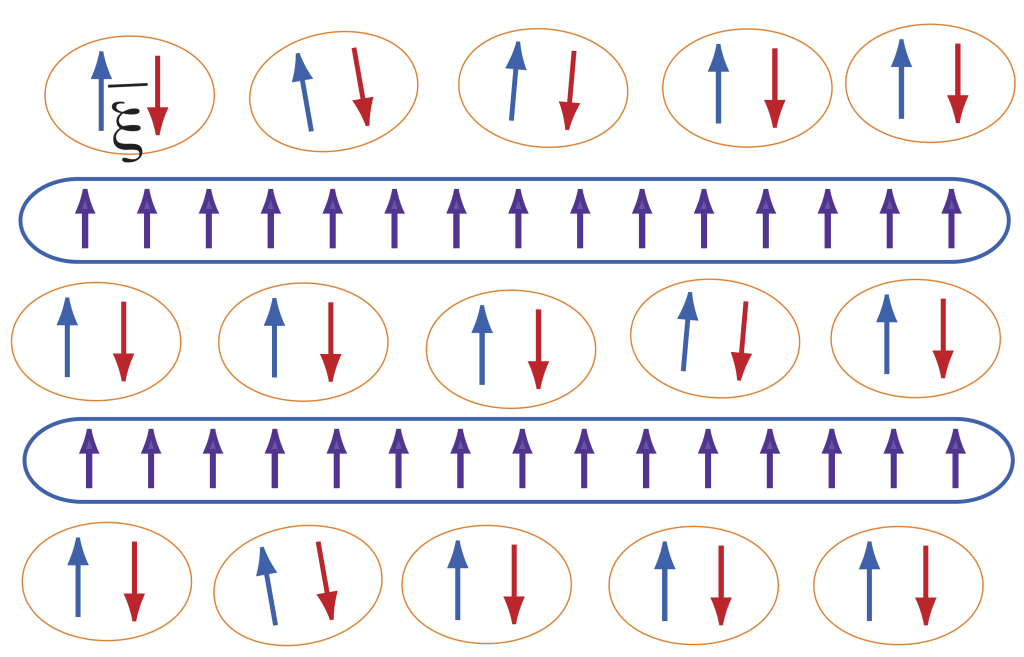
Superconductors and magnetic fields do not usually get along, but a research team led by a Brown University physicist has produced new evidence for an exotic superconducting state that can indeed arise when a superconductor is subject to a strong magnetic field. Their results could enable scientists to develop materials for more efficient memory storage, and even help to explain the behavior of distant astronomical objects called pulsars.

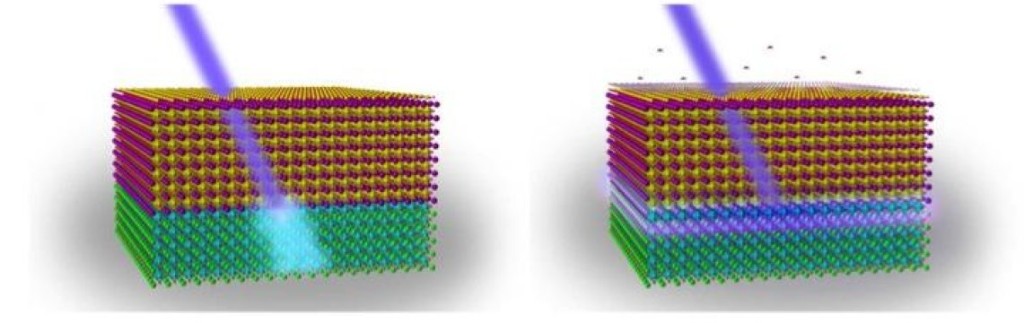
A bit of stray moisture during an experiment tipped off scientists about the strange behavior of a complex oxide material they were studying—shedding light on its potential for improving chemical sensors, computing and information storage. In the presence of a water molecule on its surface, the layered material emits ultraviolet light from its interior.

Transparent conducting oxides are unusual but highly useful materials that combine transparency to visible light, similar to glass, with high electrical conductivity, similar to copper and other metals.

Scientists have finally discovered massless particles, and they could revolutionize electronics.
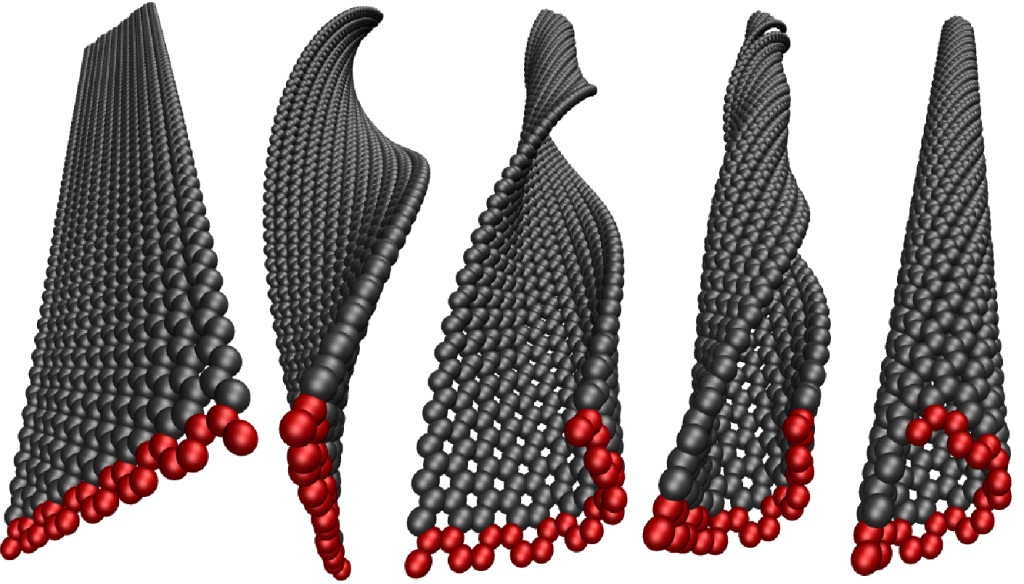
Squeezing and stretching materials only a few atoms thick can result in dramatic changes.

Developing materials that more efficiently convert solar energy to electrical energy is a major research goal of condensed matter physicists. But how do solar panels work?