



Related Posts
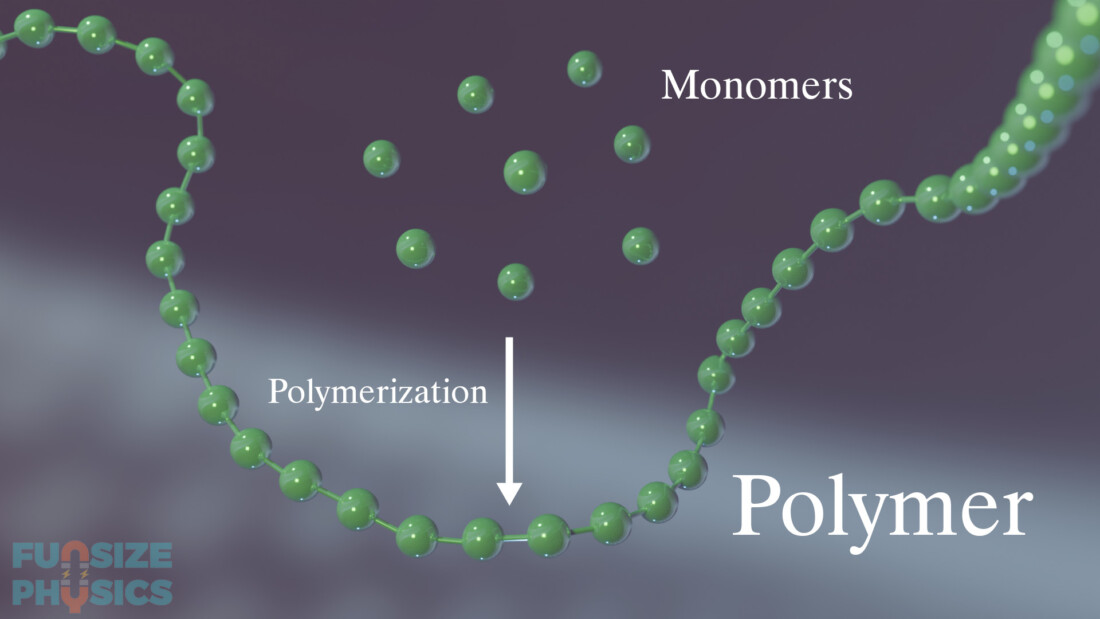
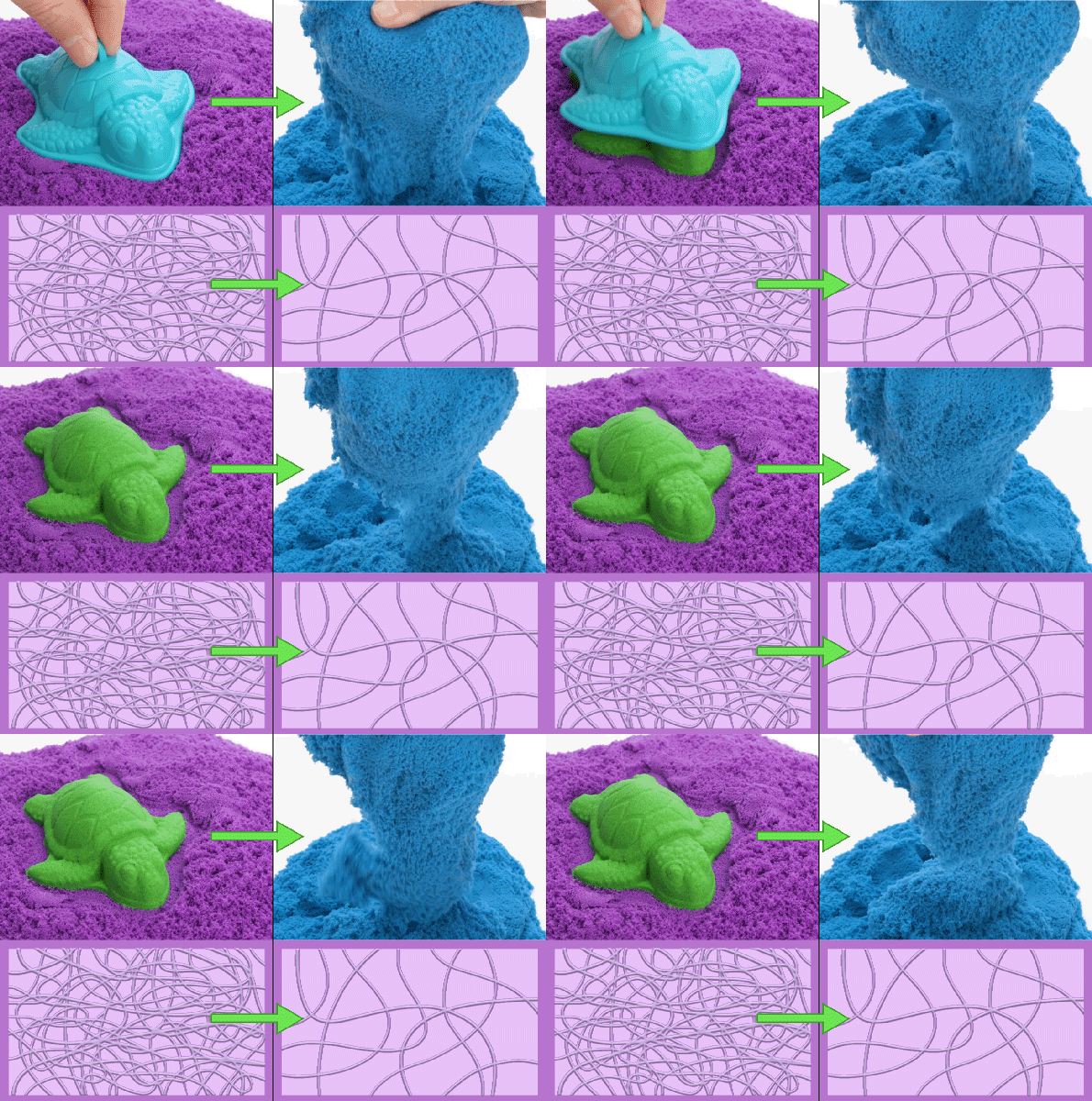
Polymers make up many of the materials we encounter every day, such as plastics and synthetic fabrics. They're also the secret science in some of your favorite toys: click to learn how polymers help us build sandcastles that never dry out!


Glaciers have shaped the face of our planet for millennia, developing over hundreds and thousands of years as layers of snow compress into solid ice. Or IS it . . . ? Click to learn how glaciers actually flow like a liquid, and how the surprisingly similar physics of Flubber can build our intuition for how real glaciers behave.

There is some serious science behind Silly Putty! This classic toy gets its unique properties from materials you can find around your house or at the grocery store. Click to learn how you can make your own Silly Putty at home and try some fun experiments to investigate its properties!
More Funsize Fundamentals

Electromagnetic waves are the fundamental source of information about the universe, but only a tiny fraction of them are visible to the unaided eye. Fortunately, physicists have developed new ways to "see" outside the visible spectrum. Click to enter a universe BEYOND living color!

How can this ring change color depending on its wearer’s mood? The short answer is polymers—long molecular chains that make up everyday objects like garbage bags and toothbrushes, along with some of your favorite toys! Click to learn how mood rings rely on the shapeshifting behavior of polymers to predict your mood. (Maybe.)

Why do so many fluids behave counterintuitively? Many substances in our lives – like oobleck, slime, or Silly Putty – don’t quite behave the way we expect a fluid to, despite some fluid-like properties. These substances fall into a special category: non-Newtonian fluids. Scientifically, this term is a bit of a catch-all for any substances that have a complicated relationship between their apparent viscosity and the force applied to them.
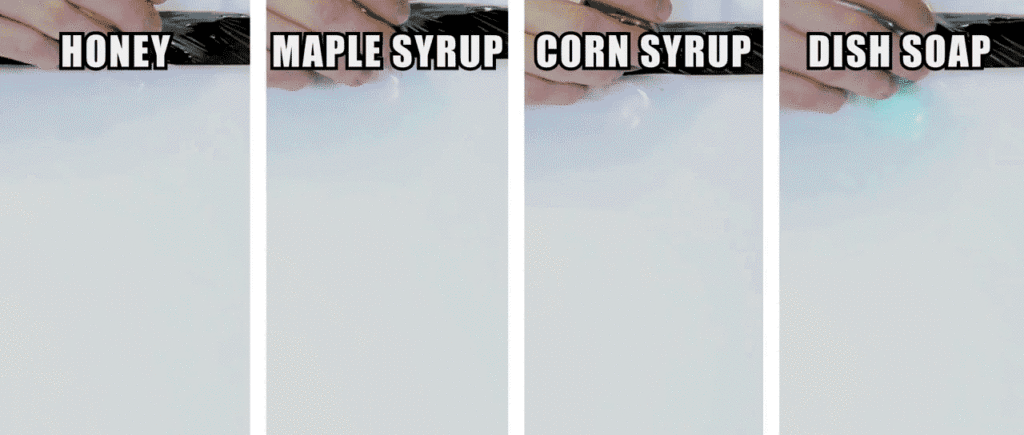
The term may be unfamiliar, but we all have a sense for viscosity. We often think of it colloquially as the “thickness” of a fluid. It’s the property that makes honey pour so differently from water. Fluid dynamicists – scientists and engineers who study how liquids and gases move – tend to think of viscosity in terms of a fluid’s resistance to flowing or changing its shape.
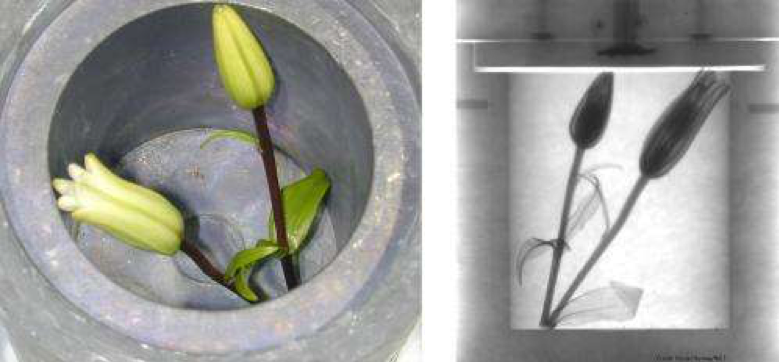
When we examine the world around us, we observe its structure, or where things are, as well as its dynamics, or how things move and interact. Likewise, when we investigate a new material, we want to understand its structure and dynamics—where the atoms and molecules are, and what they are doing. To do this, we need measurement techniques that can tell us what is happening at a very small scale. Read on to find out how neutrons come to our rescue!
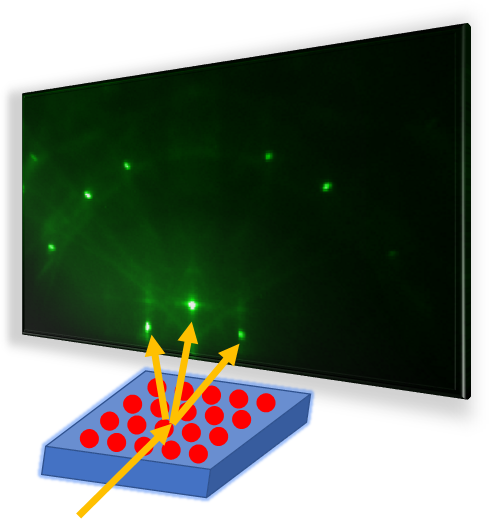
Have you ever wondered why some materials are hard and others soft, some conduct heat or electricity easily while others don't, some are transparent to light while others are opaque . . . and on and on and on? The material universe is vast and diverse, and while a material's properties depend in part on the elements it is made from, its structure—how it is built from its constituent atoms—can also have wide-ranging effects on how it looks, feels, and behaves. Diffraction is a method that allows us to "see" the atomic structure of materials. Read on to find out how it works!
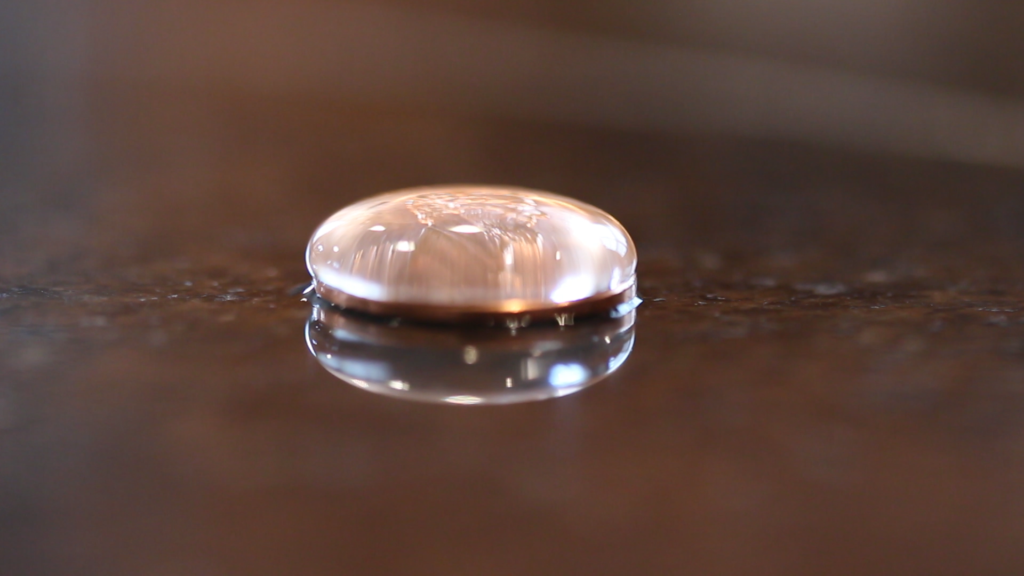
Surface tension is a somewhat peculiar force. Its effects are all around us, from bubbles and droplets to cleaning our dishes. Surface tension is an important force in our daily lives. But what is it really? Since it tends to act at the scale of millimeters or smaller, we don’t always notice it. It’s critical, however, for many creatures smaller than us, from water-walking insects to star-nosed moles that sniff out food underwater. So what is surface tension and where does it come from?
You’re lining up your phone to take a picture of your dog. Light comes down from the sun, bounces off the dog, and into your camera lens, allowing you to take the photo. Your eyes work similarly, taking in all the light particles, known as photons, that are scattering off of objects in the world. Most things “see” by detecting these bouncing photons, which is why both you and your phone have a hard time seeing anything at all when the lights are off.
When light strikes a material, electrons may be ejected from the material. This is called the photoelectric effect, and it’s the basis for many different technologies that convert light energy into electrical energy to generate current. In addition, the photoelectric effect is useful to scientists studying novel materials.

Essentially all of our technology is built by manipulating materials on length scales between a tenth of a billionth of a meter (atom-sized) and a thousand meters (skyscraper-sized). We call this range of sizes "funsize."